
Chinese Foreign Minister Wang Yi is set to attend the BRICS National Security Advisors meeting in New Delhi on June 22-23. The high-level gathering will address international security challenges, regional issues, and prepare for the upcoming BRICS Summit in India. Wang Yi is also expected to hold bilateral talks with India's NSA Ajit Doval, focusing on India-China border issues.
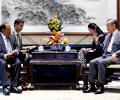
Chinese Foreign Minister Wang Yi will visit India for border talks with NSA Ajit Doval, ahead of PM Modi's visit to China for the SCO summit. The visit aims to improve bilateral ties after recent tensions.
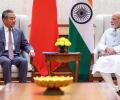
China's Foreign Minister Wang Yi expressed China's anticipation for Prime Minister Narendra Modi's visit to the Shanghai Cooperation Organisation (SCO) summit, emphasizing the importance of strong India-China relations and mutual cooperation.

Foreign Secretary Vikram Misri on Monday called on Chinese Foreign Minister Wang Yi and discussed issues of bilateral interest.
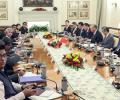
Chinese Foreign Minister Wang Yi's visit to India focuses on border talks with NSA Ajit Doval, amidst efforts to rebuild relations after the Galwan Valley clashes and rising India-US tensions.

Foreign Secretary Vikram Misri held extensive discussions with China's Vice Foreign Minister Hua Chunying and other senior officials in Beijing, reviewing bilateral relations, trade, cultural exchanges, and emphasising peace and tranquillity in border areas. His visit aims to advance the vision of both nations as development partners.

Chinese Foreign Minister Wang Yi arrived in India Thursday evening in the highest-level visit between the two countries after the ties came under severe strain following the eastern Ladakh standoff nearly two years ago.

Chinese Foreign Minister Wang Yi on Friday met Pakistan Army Chief Asim Munir and discussed regional security, counter-terrorism and matters of mutual interest.

China and India should put their differences on the border issue at a "proper position" in bilateral relations and stick to the "right direction" of bilateral ties, Chinese Foreign Minister Wang Yi said on Friday.

Chinese Foreign Minister Wang Yi has said that during his recent visit to India, he "keenly felt" that both sides had agreed to adhere to the leaders' consensus that the two countries are not a threat to each other and handle and manage their differences.

The Galwan clashes indicate to the limitations in relations if they do not address border stability, points out Srikanth Kondapalli.
The Galwan clashes indicate to the limitations in relations if they do not address border stability, points out Srikanth Kondapalli.
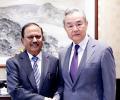
Wang is travelling to India days ahead of Prime Minister Narendra Modi's planned trip to the Chinese city of Tianjin to attend the annual summit of the Shanghai Cooperation Organisation.

Prime Minister Narendra Modi says India-China relations have made steady progress in the last 10 months, guided by respect for each other's interests and sensitivities. He made the remarks after meeting with Chinese Foreign Minister Wang Yi.

Much will depend on how the protagonists use the current interlude to work proactively for the beginning of a durable settlement or, on the contrary, prepare for a new round of escalation, points out Ambassador M K Bhadrakumar.

The escalating crisis in West Asia and its impact on the global energy supply chain are expected to dominate deliberations at a two-day meeting of BRICS foreign ministers to be hosted by India.
India and China have reached new common understandings agreeing to conduct normalised management and control of the boundary during Foreign Minister Wang Yi's visit to New Delhi, Beijing said.
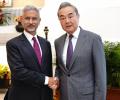
China promised to address three key concerns of India, the sources said.
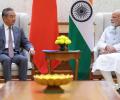
'New Delhi is not naive about its foreign policy choices.'

India-US relations, like Rome, were not built in a day, nor can they be demolished in a day.
All said and done, when the new global order emerges, India can only remain with the democracies, asserts Ambassador T P Sreenivasan.

Chinese Foreign Minister Wang Yi said that it is imperative for the two sides to view each other as partners and opportunities rather than rivals or threats, and invest their valuable resources in development and revitalisation.
India and China are expected to discuss new confidence-building measures for durable peace and tranquillity along their contested border during Chinese Foreign Minister Wang Yi's two-day visit to India. The visit is seen as an effort to rebuild relations after the Galwan Valley clashes.

External Affairs Minister S Jaishankar is scheduled to visit China for an SCO conclave, marking a significant step in easing tensions after the 2020 border standoff. Discussions on the boundary dispute are also anticipated.

National Security Advisor Ajit Doval on Monday emphasised the need to counter terrorism in all its forms for overall regional peace and stability during a meeting with Chinese Foreign Minister Wang Yi in Beijing.

The Beijing summit may have reduced immediate diplomatic uncertainty, but it did not resolve the deeper structural contest between the United States and China. That contest appears likely to define the coming decade, notes Varun Arya.

National Security Advisor Ajit Doval stated that India-China relations have shown an "upward trend" in the past nine months, with peace prevailing along the Line of Actual Control (LAC). This statement was made during talks with Chinese Foreign Minister Wang Yi on the boundary issue, ahead of Prime Minister Modi's visit to China for the SCO summit.

The NSA particularly highlighted the need for resolving outstanding issues as quickly as possible and talked about the need for maturity and sincerity in dealing with the issue.

China has expressed surprise over India's clarification regarding its stance on Taiwan, following reported comments by External Affairs Minister S Jaishankar. Beijing claims India's position is inconsistent with facts and undermines China's sovereignty.

The Indian and Chinese militaries held a fresh round of high-level military talks focusing on maintaining peace and security along the Line of Actual Control (LAC) in eastern Ladakh.

India has announced the resumption of tourist visas for Chinese nationals, signaling an effort to improve bilateral relations following border tensions.

Prime Minister Narendra Modi is expected to visit Japan and China starting around August 29. The visit to China would be his first after the Ladakh border standoff.
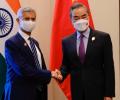
External Affairs Minister S Jaishankar on Thursday conveyed to his Chinese counterpart Wang Yi the need for an early resolution of all outstanding issues along the Line of Actual Control in eastern Ladakh, and asserted that bilateral ties should be based on mutual respect, mutual sensitivity and mutual interest.
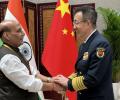
China has called Tibet-related issues a 'thorn' in India-China bilateral relations and a 'burden' for New Delhi, ahead of External Affairs Minister S Jaishankar's visit to China.

India received FDI equity flows from China worth $2.67 million in FY25, which was 0.01 per cent of the total FDI equity receipts by India in FY25.
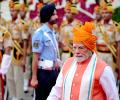
Prime Minister Narendra Modi will travel to China to attend the Shanghai Cooperation Organisation (SCO) summit, marking his first visit in over seven years. The visit signals a potential improvement in India-China relations after recent tensions.
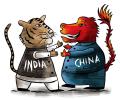
India and China have announced a series of measures aimed at improving their relationship, including maintaining peace along the border, reopening border trade, and resuming direct flights.

China and Pakistan concluded their strategic dialogue, reiterating their opposition to unilateral actions in South Asia and discussing Kashmir, Afghanistan, and trilateral cooperation.
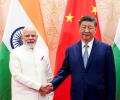
'What's currently underway is not a 'reset'.' 'What needs to be arrived at is a new balance.'

A meeting with Chinese President Xi Jinping on the sidelines of the SCO summit is being planned.
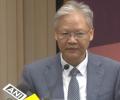
Chinese envoy Xu Feihong stated that China opposes the US imposing tariffs on India, amidst a thaw in Sino-India relations and concerns over global trade disruptions.
